


We grow up surrounded by one message.
Success. Success. Success. Win. Achieve. Succeed.
From school rankings to performance reviews to startup metrics, the scoreboard dominates everything. Losing is treated as a problem to be avoided, hidden, or fixed as quickly as possible.
But there is a quiet and powerful counter story hidden inside the career of one of the greatest athletes of all time: Roger Federer.
The Story Behind The Trophies
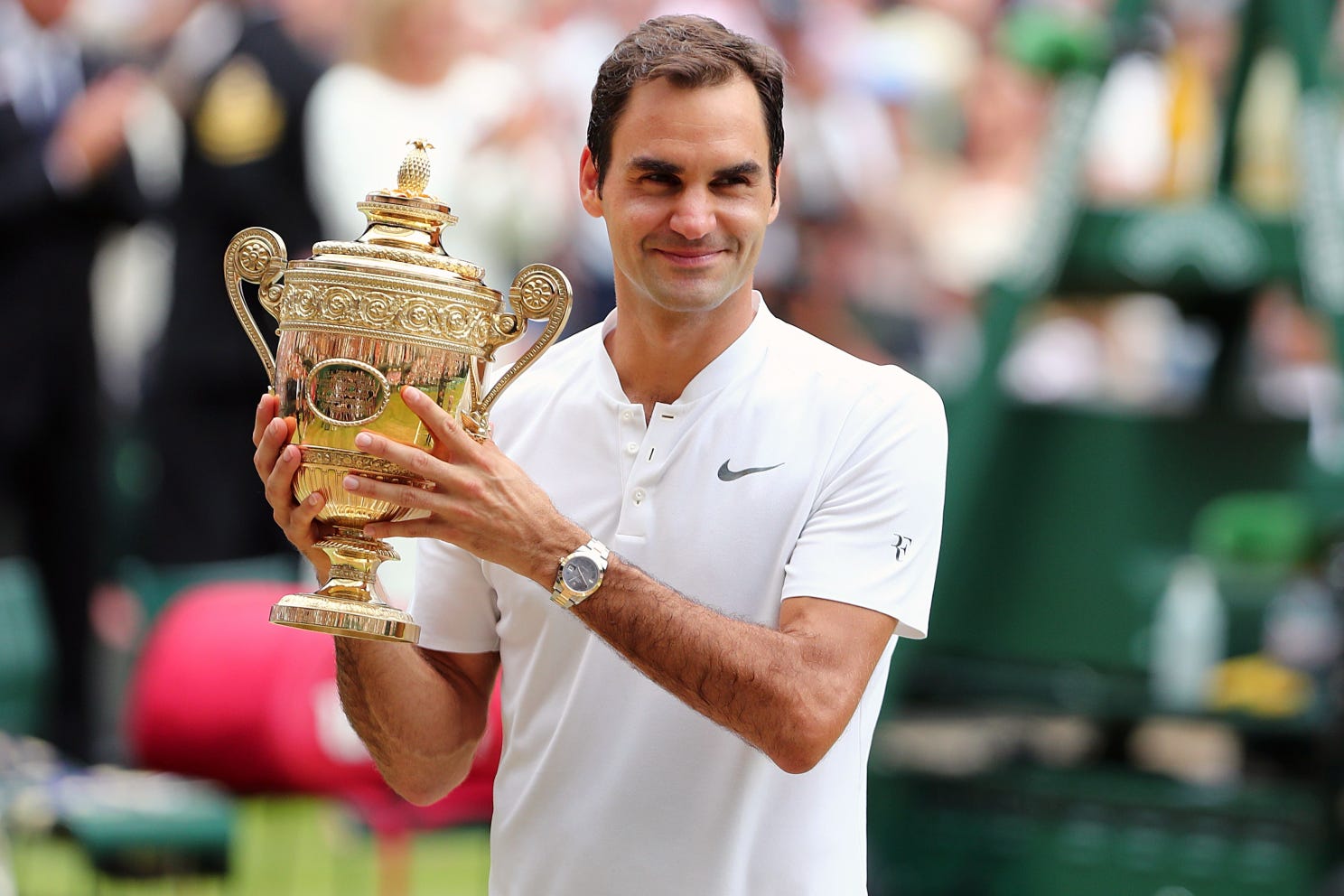
One June morning, during a steady rain in New Hampshire, Roger Federer spoke about failure.
He said, if winning is everything, how do you explain my career?
Over his life as a professional tennis player, he played 1,526 singles matches. Stadiums full o people. Millions watching. Pressure and expectation attached to every swing of the racket.
People often say, “Roger, you were so dominant.”
And it is true. He won close to 80 percent of those matches. He lifted 20 Grand Slam trophies, including eight Wimbledon titles, a record that stood for years.
From the outside, it looks like control, certainty, and constant success. Then Federer asked a second question.
If I won almost 80 percent of my matches, what percentage of points do you think I won?
Most people guess high. Eighty. Ninety. Seventy five.
The real answer is 54 percent.
That means one of the greatest careers in tennis history was built while losing 46 percent of all the points he ever played. Nearly every second point was lost. This is not a story about perfection. It is a story about resilience, composure, and what you do after each loss.
The Illusion Of Constant Success
Social media, LinkedIn updates, and highlight reels create the same illusion Federer’s trophy cabinet does. An uninterrupted sequence of wins.
You see promotions, funding rounds, awards, and excited announcements. You do not see the 46 percent.
1) The failed proposals.
2) The jobs not offered.
3) The products that never launched.
4) The rejections, edits, rewrites, and unanswered emails.
When we only look at matches, the big visible outcomes, we forget that every visible win is built on a stack of invisible small losses. When children, students, or young professionals believe everyone else is winning all the time, even a single setback feels like proof that something is wrong with them. In reality, most high performers live in that Federer zone. They win just slightly more than they lose in the moments that matter.
Why this story is for my wife
This is the story of my wife’s 2025. She stepped into a completely new landscape of dental exams and, academically, she was prepared – but she was not fully aware of how brutal the challenge would feel in real life. With a three‑month‑old baby at home, even a single quiet moment was hard to find, yet she was sitting for an exam almost every week. What should have been a test of knowledge became a test of endurance.
These were the exams most people usually clear, the ones that are “easy to crack” with enough practice, where everyone knows the pattern, understands the pressure, and comes ready for battle. The failure rate was low on paper, yet she kept finding herself in that small group that did not make it, again and again.
From the outside, it looked like defeat. She sought support for the external problems, while quietly fighting the internal ones on her own. The right help at the right time, and the actions that followed, allowed us to move forward with more strength and clarity.
If you ask her how 2025 felt, she will probably say it was exhausting, even brutal. But what most people never saw was what happened next, how she turned that painful year into the foundation for her eventual success.
She showed up again.
She practiced again.
She moved out of the house.
She stayed away for six months.
She prepared for the exam every single night, turning exhaustion into quiet, steady progress.
She carried family responsibilities, financial stress, medical expensed and a quiet storm of self‑doubt. And still, with all of that on her shoulders, she walked back into the exam hall with steady determination.
Then came the turning point.
She cleared the dental exam where the pass percentage is low, the exam most people fear, the one where failure is common.
On paper, the odds were against her. In reality, she was ready.
If you only look at the early scorecard, you see red marks. Fail. Fail. Fail. If you look at who she became, you see something else entirely. Resilience. Depth. A quiet strength that cannot be taught from a textbook.
Just like Roger Federer built a legendary career while losing 46 percent of the points he played, my wife built her success while living through more failure than most people will ever admit.
She is proof that failing where most people pass does not define who you are, and succeeding where most people fail can rewrite your entire story.
The question is never simply, “Did you pass or fail?”.
The real question is, “Who did you become on the way to overcoming your failure?”
Note: We had already faced and overcome an immigration challenge in 2023, and we did it the same way: by preparing early and staying patient, even when nothing was guaranteed. Immigration pressure was always in the background, something we tried to stay ahead of with careful planning, even when the future was unclear and the next step was hard to see.Leadership in a 54 percent world
Real leadership is not defined by a flawless record. It is defined by how people handle the 46 percent.
In teams and organizations, this shows up as: Normalizing honest failure. Leaders who share their own lost points make setbacks discussable, not shameful. Rewarding learning, not just outcomes. Asking what did we learn becomes more important than did we win. Designing systems that survive loss. The goal shifts from avoiding every mistake to absorbing mistakes and learning quickly.
The question is not, how do we win every time? The real question is, how do we grow every time, whether we win or lose? Life often comes down to a thin line. A small difference in choice, attitude, or response that quietly determines where you end up.
This article is for my wife. Shahana Putta Jegadeshan
For her courage to keep playing points even when the score was against her.
For proving that success is not about never losing, but about staying in the game long enough to win the matches that truly matter.