


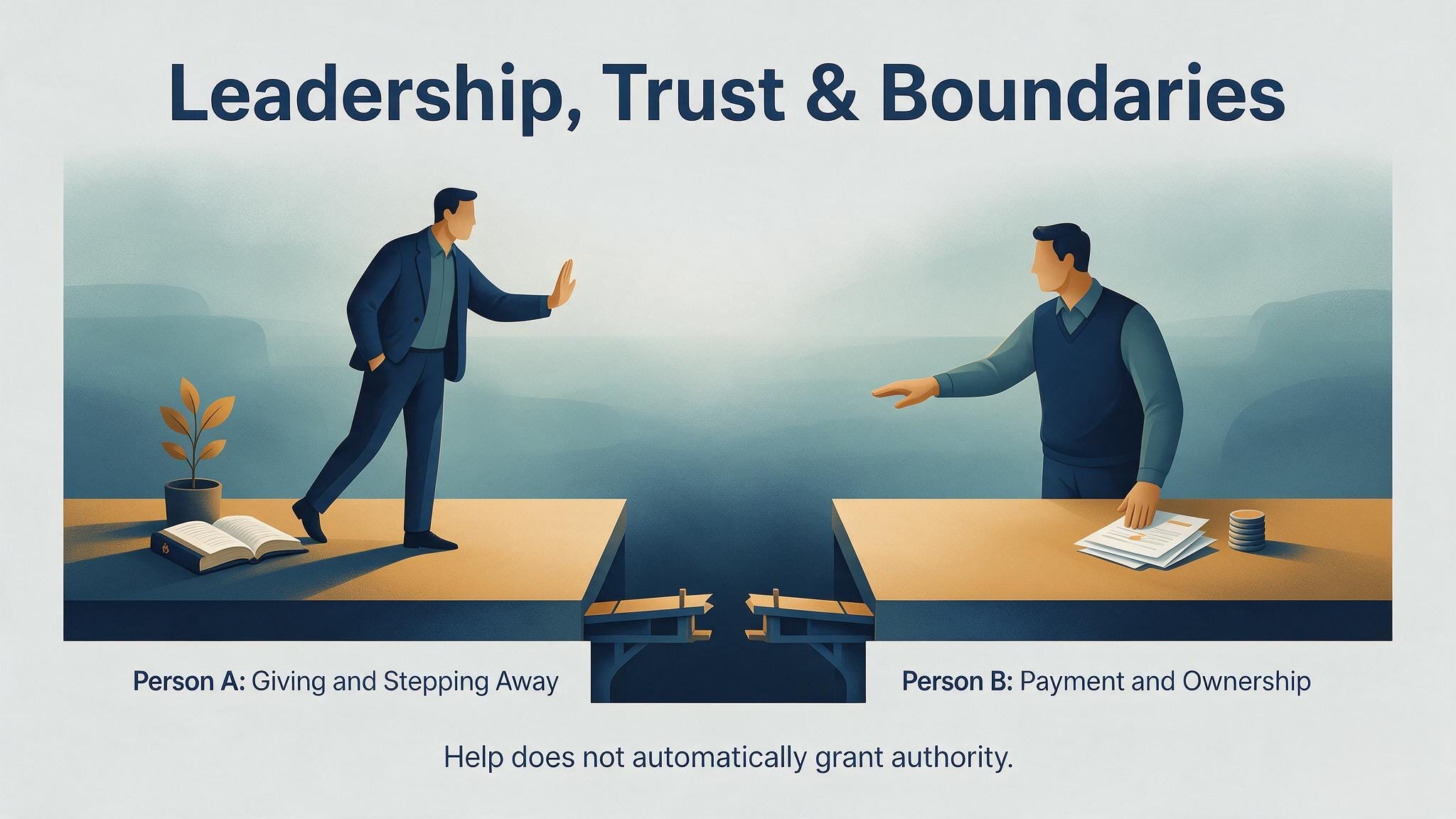
Leadership is not measured only by what someone knows or gives. In the situation described, its moral test is accountability: whether each person recognizes the other’s contributions, respects agreements, and accepts boundaries.
The following perspectives reflect the account provided, not verified knowledge of either person’s private thoughts.
Person A: Generosity With Boundaries
Person A’s feelings might be expressed this way:
“I offered support, shared my knowledge, and compensation expecting appropriate support from others. I did not expect my contributions to give me control over him. Equally, I did not agree that his help would give him ownership over my work or decisions. When the relationship crossed that line, I chose to stay away.”
From A’s perspective, leadership means helping someone progress without surrendering personal dignity. His withdrawal can be understood as a boundary rather than retaliation.
A third party could see generosity and restraint in that response. However, the account does not establish whether A communicated every expectation clearly. His position is strongest when it rests on what was actually agreed upon, rather than an expectation that earlier generosity must automatically be repaid.
Person B: Compensation Without Assumed Authority
Person B’s possible feelings might be expressed this way:
“I believe my contribution has value, and I want compensation for my help. I may feel that my effort deserves more recognition.”
Wanting payment does not, by itself, show poor leadership. The concern is whether B explained the payment, fulfilled his commitments, and distinguished compensation from ownership.
From a third party’s perspective, B’s conduct becomes morally questionable if he demands something that was never agreed upon or treats assistance as permission to take control. Feeling underappreciated may explain his position, but it would not justify overriding A’s consent.
The Leadership Lesson
The contrast is not simply between someone who gives and someone who asks for money. It is between two ways of handling a relationship: respecting its agreed limits (Boundaries) or expanding one’s claims beyond them.
Based on A’s account, his decision to step away reflects a refusal to continue under terms he did not accept. B’s leadership would need to be judged by whether he can explain his request transparently, acknowledge A’s contributions, and accept that providing help does not automatically grant authority.