


If you are building a startup that sells to enterprises, SOC 2 quickly shifts from a “nice to have” to a “must have.” Yet most founders either overcomplicate it or delay it too long. This guide breaks down what SOC 2 actually is, why it matters, and how to approach it without wasting time or money.
SOC 2 Fundamentals
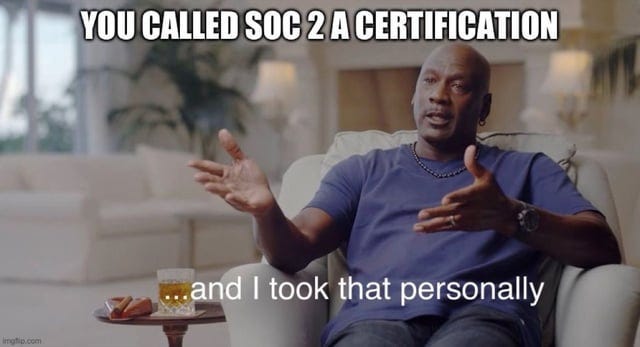
SOC 2 is not a certification. It is an attestation report issued by an independent auditor that evaluates how well your company implements controls related to security, availability, confidentiality, processing integrity, and privacy.
This distinction matters. You are not “SOC 2 certified.” Instead, you demonstrate that your controls are properly designed and, in some cases, operating effectively.
For startups, SOC 2 is primarily a sales enabler. Enterprise buyers want proof that you can handle sensitive data responsibly. Without SOC 2, you will face long security reviews, repeated questionnaires, and friction in closing deals. Each prospect essentially runs their own audit on you.
With SOC 2, the dynamic flips. Instead of reacting to every request, you provide a standardized report that builds trust upfront. This reduces back and forth, shortens sales cycles, and signals maturity well beyond your company’s size.
Implementation Approach and Timeline
There are two types of SOC 2 reports, and choosing the right path early is critical.
Type 1 evaluates whether your controls are properly designed at a specific point in time. It is faster and less expensive, making it ideal as a first milestone or readiness signal.
Type 2 goes further. It evaluates whether those controls actually operate effectively over a period of time, typically between three and twelve months. This is what most enterprise customers ultimately expect.
A practical timeline for startups looks like this:
Readiness assessment: one to three weeks if you have some structure, up to three months if starting from scratch
Type 1 audit: about five days of audit fieldwork followed by roughly one month for the report
Type 2 audit: around three weeks of fieldwork plus four weeks for reporting
In terms of cost, many startups spend around thirty five thousand dollars to complete both Type 1 and Type 2 within the same year. Costs vary depending on complexity, auditor, and tooling.
SOC 2 is not a one time effort. You will need to renew it annually to maintain credibility with customers.
Most early stage teams do not have in house compliance expertise. The common approach is to use a compliance automation platform such as Vanta along with a consultant to guide readiness. This combination reduces manual work and helps avoid common mistakes.
LangChain Case Study and Practical Lessons
LangChain pursued SOC 2 to unlock enterprise adoption for its LangSmith observability platform. Their experience highlights how impactful this process can be when done right.
Before SOC 2, a large portion of their time went into answering repetitive security questionnaires. After implementation, they reduced that burden by as much as eighty to ninety percent. They also launched a self serve trust center, allowing prospects to access security information without blocking on internal teams.
More importantly, SOC 2 gave them a credible signal of security maturity, which is often the deciding factor in enterprise deals.
Arthur from LangChain shared a few practical lessons:
There is no universal template. The best approach builds on your existing workflows rather than forcing rigid compliance structures.
Prioritize the highest risk areas first. Not all controls carry equal weight, and early focus should be on what truly protects customer data.
Start earlier than you think. If enterprise sales are part of your roadmap, SOC 2 should not be delayed until deals are already in motion.
SOC 2 vs ISO 27001
SOC 2 and ISO 27001 overlap significantly, with roughly seventy five percent of controls aligning. The difference is largely geographic and stylistic.
SOC 2 is more common in the United States and provides detailed, narrative reports that customers can review directly.
ISO 27001 is more widely recognized in Europe and focuses on certification against a standardized framework.
For US based startups targeting enterprise buyers, SOC 2 is typically the faster and more practical starting point.
SOC 2 is not just about compliance. It is a growth lever. Done correctly, it reduces friction in sales, strengthens trust with customers, and forces your team to build better internal systems.
Treat it as part of your go to market strategy, not just a checkbox.